

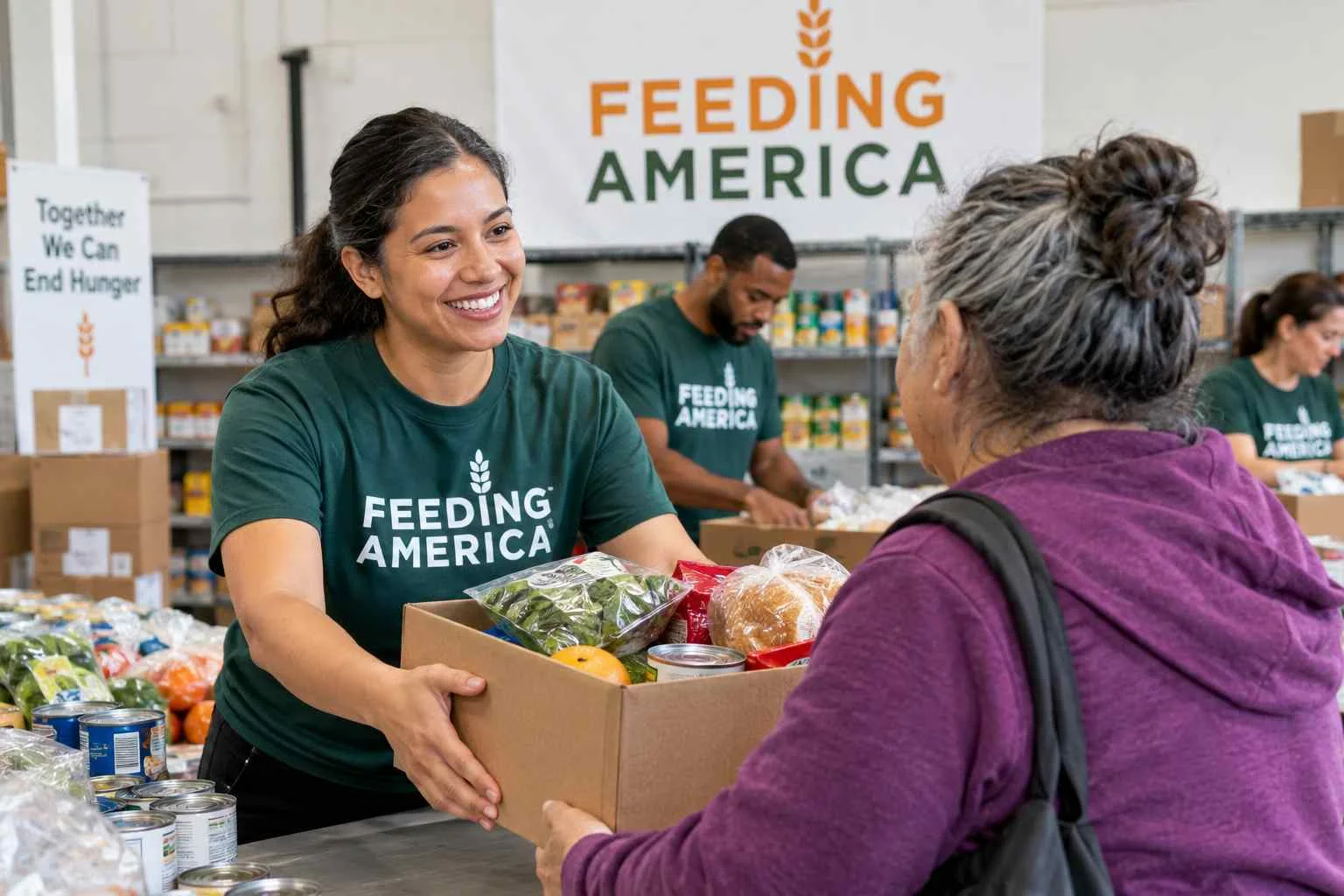
Who is Eligible for Feeding America? Learn More About This Feeding Program
People experiencing food insecurity can receive help through the Feeding America network. This feeding program doesn’t have any income gaps or demographic exclusions. Individuals or families can get emergency food from a partner pantry or meal program.
Some partners of Feeding America have specific requirements, though. Understanding how eligibility works helps people access available food resources.
Vital Takeaways
- It’s open to everyone in need. Anyone having problems buying food can visit a Feeding America partner pantry.
- Feeding America doesn’t have any direct restrictions. The organization does not enforce any rigid eligibility limits or paperwork checks.
- Local variables apply. Individual pantries may need basic proof of residency or household size. This is to gauge supply needs.
- It’s aligned with federal programs. Local food banks can help visitors apply for government benefits like SNAP and WIC.
- It has diverse programs. Feeding America’s assistance extends beyond traditional pantries. It has mobile distributions, elder boxes, and weekend backpacks for kids.
Who Can Receive Food Assistance from Feeding America?
Feeding America works with local food banks to check eligibility. They determine eligibility based on community needs and available resources. Specific requirements differ, but many people facing food insecurity are eligible for help.
- Individuals and families who are facing food insecurity.
- Households with low or moderate earnings that struggle to buy groceries.
- People experiencing temporary financial difficulties. Individuals who are working reduced work hours or have lost a job.
- Seniors living on fixed incomes.
- Veterans facing financial difficulties.
- People with impairments who need more food aid.
- College students who match the local eligibility criteria.
- Families with children who need more food resources.
- Individuals recuperating from natural disasters or unanticipated situations.
- Anyone who meets the guidelines established by their local Feeding America partner.
How Does Feeding America Determine Eligibility?
Feeding America is a national nonprofit organization. It supplies food to a network of local food banks. Each food bank has its own set of criteria that are tailored to local requirements. It is also influenced by available resources and mandates from state or federal programs.
Some food pantries only ask visitors to confirm that they need help. Others may verify household size, income level, or residency. The process helps manage an area’s feeding program. It guarantees that food is distributed fairly. It also ensures that persons experiencing hunger receive help.
What Kind of Food Assistance is Available?
Local Feeding America food banks provide a range of initiatives. Each one meets different community needs. Available services depend on the location and available resources.
Common programs include:
- Food pantry distributions.
- Mobile food pantries.
- Fresh produce distributions.
- Senior feeding program.
- School meal and backpack programs for children.
- Disaster relief food help.
- Supplemental groceries for families.
- Community feeding program through partner groups.
Some food banks also connect visitors with more community resources. For instance, they provide nutrition education. Some give referrals to other assistance programs.
Why Eligibility Requirements May Differ
Feeding America serves communities across the United States. As a result, local food banks have greater flexibility to meet regional needs. Local eligibility standards are influenced by various factors. For instance, population size, funding, food availability, and community demand.
Some food banks help anyone who seeks it. Others target households with incomes below a specific level. During an emergency, eligibility requirements change to ensure that more people receive food.
Understanding these distinctions can aid individuals in preparing for their visit. Organizations like Esther Single Mothers Outreach, Inc. can help. They assist them in determining which resources are best for their situation.
Frequently Asked Questions
Do I need to show proof of low income to get food?
No, you do not need to prove low income to receive basic emergency groceries. Federal distributions like TEFAP have income guidelines. But private food pantry resources are given to anyone who says they need help.
What documents should I bring on my first visit?
Requirements vary, but it is helpful to have some form of identification. Bring a recent utility bill to verify your address. Some local pantries restrict services to certain geographic boundaries. They do this to manage their stock.
Can non-U.S. citizens obtain food through the network?
Yes, Feeding America partner pantries serve all community members. They do this regardless of their citizenship or legal status. Documentation about immigration status is not required to access emergency food distributions.
Is there a limit to how often I can request help?
The frequency limits are determined by the local pantry’s unique rules. Some pantries accept weekly visits, while others limit it to once a month. This is to ensure that all community members have access to the available inventory.
How are Feeding America services different from SNAP benefits?
Feeding America offers instant, free physical groceries. These are given through local distributions and independent community pantries. The Supplemental Nutrition Assistance Program (SNAP) is a federal government benefit. It provides monthly funds via an electronic card. SNAP beneficiaries can use this to buy groceries at commercial retail stores.